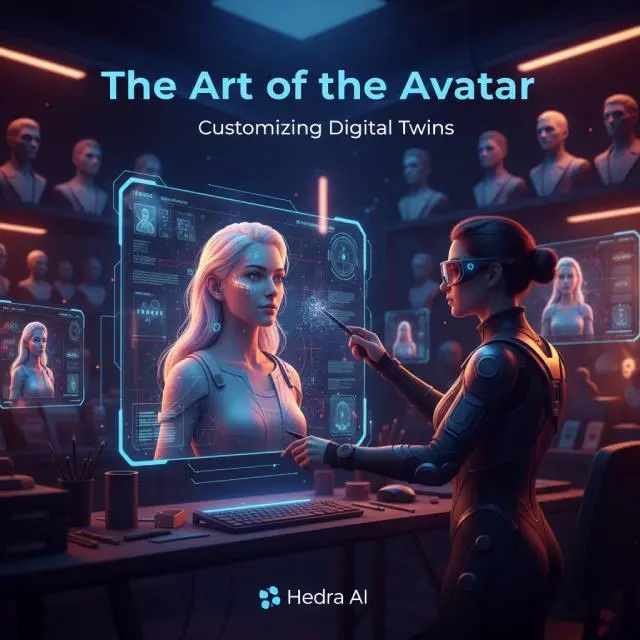
"The Art of the Avatar"
Here is the full content and structure for the blog post "The Art of the Avatar" : Customizing Digital Twins written in a style that fits your platform's professional and innovative tone.
The Art of the Avatar: Customizing Digital Twins
In the rapidly evolving digital landscape of 2026, the concept of a "Digital Twin" has moved from science fiction to an essential business and creative asset. Whether you are an influencer, a corporate trainer, or a storyteller, the ability to generate a consistent, high-fidelity avatar is the key to scaling your presence without losing the human touch.
1. James Cameron's The Art of Avatar
This book, titled The Art of Avatar: James Cameron's Epic Adventure, focuses on the 2009 blockbuster film.
- Key Figures: Written by Lisa Fitzpatrick, with a preface by Peter Jackson, a foreword by Jon Landau, and an epilogue by James Cameron.
- Release Date: November 30, 2009.
- Contents: * Contains over 200 full-color images, including concept art, sketches, matte paintings, and film stills.
- Focuses heavily on the environments of Pandora, its bioluminescent flora, and the diverse creatures (like the Banshees and Great Leonopteryx).
- Includes interviews with art directors and visual effects designers (from Weta Digital and ILM) about the technical challenges of 3D world-building.
- Format: 108 pages; typically published as a hardcover "coffee table" book.
2. Avatar: The Last Airbender — The Art of the Animated Series
This book focuses on the beloved Nickelodeon animated series created by Michael Dante DiMartino and Bryan Konietzko.
- Key Figures: Authored by the creators themselves, providing intimate commentary.
- Chapter 1: Early Development (Original sketches of Aang with a robot companion).
- Chapter 2–4: Seasons 1, 2, and 3 (Water, Earth, and Fire aesthetics).
- Chapter 5: Ancillary Art (Promotional material and "Chibi" designs)
- First Edition (2010): 184 pages with a foreword by M. Night Shyamalan.
- Second Edition (2020): Released for the 15th anniversary. It includes 8 extra pages of new art and a foreword by Gene Luen Yang.
- Deluxe Edition: Features a slipcase, a gilded cover, and an exclusive lithograph.
Editions:
Core Pillars of Avatar Artistry
1. Emotional Fidelity (The Face)
- Micro-expressions: True customization goes beyond skin tone. It involves the rigging of facial muscles to ensure that joy, skepticism, and empathy translate accurately in real-time.
- The "Uncanny Valley" Bridge: Using soft-body physics to ensure skin movement looks natural rather than plastic.
2. Spatio-Temporal Stability (The Movement)
- Fluid Motion: A custom avatar must move with the same weight and cadence as its creator.
- Environment Interaction: How the avatar’s clothing or hair reacts to digital wind or lighting changes defines the level of immersion.
3. Cinematic Physics (The Aesthetic)
- Material Design: Customizing textures like silk, denim, or metallic armor using PBR (Physically Based Rendering) to ensure the avatar looks "cinematic" in any lighting engine.
- Proportions: Offering "Heroic" vs. "Realistic" sliders to allow users to choose their digital silhouette.
The Importance of Character Consistency
The primary challenge in AI video generation is "character drift"—when a character’s appearance changes slightly from one scene to the next. To build a true Digital Twin, you must master the art of consistency. Brand recognition is built on familiarity; if your audience sees the same face, they build a deeper level of trust with your content.
Expert Tip: The Seed Method
To maintain facial features across multiple videos, always record the "Seed Number" of your successful generations. Reusing this unique identifier allows the AI to reference the exact facial structure while you change the lighting, background, or outfit.
Key Strategies for Avatar Customization
- Define Your Base DNA: Start with a high-resolution reference image. This serves as the anchor for the AI, ensuring the bone structure and key features remain stable.
- The Power of Descriptive Adjectives: Instead of a generic prompt like "a professional person," use sensory details. Try "a digital creator with sharp features, wearing matte black spectacles and a silk charcoal blazer."
- Lighting and Atmosphere: Your avatar doesn't just need a face; it needs a world. Consistent lighting (e.g., "warm cinematic glow" or "clinical office lighting") ensures that your twin looks like they belong in every frame.
From Static Image to Talking Video
The magic happens when your customized avatar meets our lip-syncing and expression modeling technology. By uploading a voice clip or using our neural text-to-speech, your Digital Twin can deliver presentations, host webinars, or star in social media ads—all while you focus on the bigger picture.
The Future of You
As AI continues to advance, your Digital Twin will become more than just a video asset; it will be your representative in the digital world. Mastering the "Art of the Avatar" today ensures you stay ahead of the curve in a world where presence is no longer limited by your physical location.
The Art of the Avatar
Exploring the intersection of emotional intelligence and cinematic realism.
Through the Omnia model, the avatar doesn't just move its mouth; it synthesizes micro-expressions and head tilts in a single stream. This ensures body language matches the emotional weight of the audio automatically.
The engine uses a global phonetic mapping system. This allows the avatar's lip-sync to remain natively accurate across a massive diversity of accents, from Hindi to Spanish.
Wan 2.2 utilizes "Subsurface Scattering," simulating light bleeding through translucent materials like skin. This ensures the avatar feels like a solid, 3D entity rather than a flat cutout.
Hedra Omnia processes image, text, and audio in one stream. This creates a "unified intelligence" where every movement is perfectly synced to the speaker's tone.
By prioritizing "micro-gestures"—such as natural eye-darting and subtle swallowing—the model mimics human imperfection, making it feel like a living entity.
Yes. The intelligence of Omnia is style-agnostic. Whether it's a 3D Pixar-style character or a hand-drawn sketch, the engine maps emotional intelligence to the artistic medium provided.
Wan 2.2 supports Chiaroscuro effects. This allows artists to use light and shadow to deepen the performance, adding dramatic tension that matches the spoken audio.
The 3D causal VAE ensures facial features and clothing patterns remain "locked" in place, maintaining artistic integrity even during high-action movements.